
Government
LGA and growth corridor land supply data for planning authorities
Councils, state agencies and planning authorities need a clear, current view of land activity to support informed forecasting, planning and decision-making. Terralytics gives you a detailed view of lot supply, sales activity and settlement timing across your LGA and growth corridors, refreshed monthly, so you can plan services, infrastructure and rates with a clearer understanding of what’s happening on the ground.
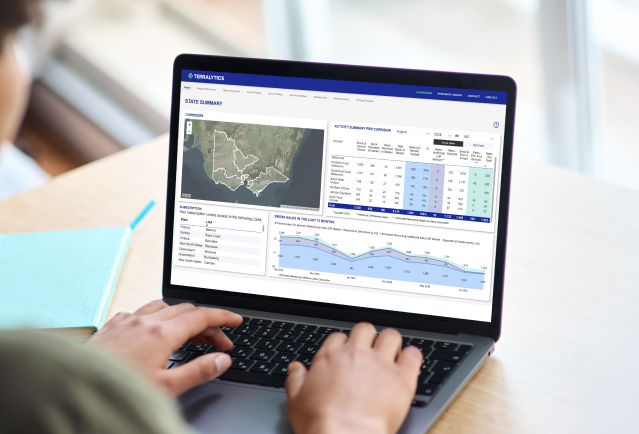
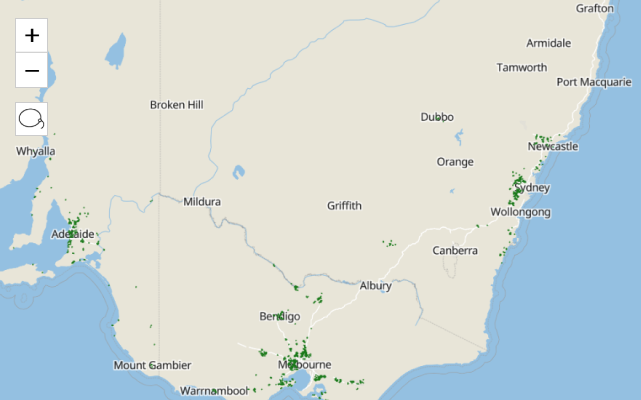
Growth area monitoring across 45 LGAs
Select any LGA or corridor and see every active and completed project, current stock, sales activity, and how development has moved over 10 years. Follow the direction and pace of urban growth across your area, and compare corridors side by side, all from an interactive map you can filter to what matters.
Settlement volumes you can plan infrastructure around
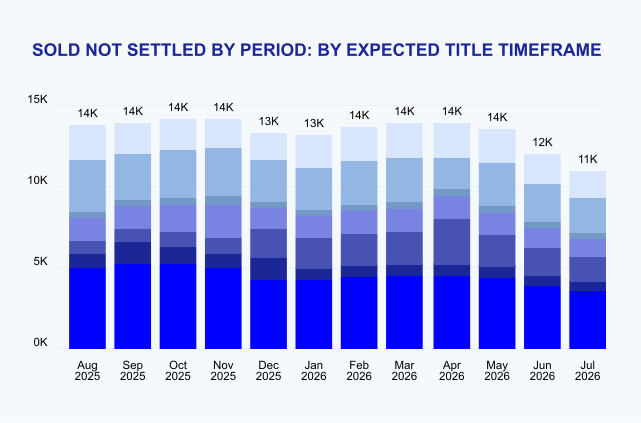
Drill into projects to see lots by size, stage, price and $/sqm, with sales and settlement dates attached. Understand how many lots are due to settle, where and when, to support infrastructure sequencing, community facilities and rates forecasting. Bring current lot-level data straight into your planning and forecasting.
See Terralytics in action
Book a demo to see how Terralytics can enhance your decision making through accurate, timely land market intelligence.
Frequently Asked Questions
Terralytics helps you understand the residential lot supply within your Local Government Area (LGA) by providing visibility across active estates.
You can assess available, sold and upcoming residential lots across an LGA, compare supply between estates, and build a clearer view of the greenfield residential land market. This helps councils, planning authorities and infrastructure teams understand current supply levels, upcoming stock and potential changes in market conditions.
Terralytics helps you forecast residential land settlement volumes by providing visibility into current sales activity, sold lots awaiting settlement and upcoming settlements across development projects.
By analysing historical settlement trends, current sales activity and upcoming lot settlements, you can estimate the volume and timing of residential land moving through the development pipeline. This can help councils, infrastructure providers and developers plan infrastructure sequencing, service requirements and future capacity based on expected development activity.
Terralytics provides the data needed to understand where and when residential development is progressing, supporting more informed infrastructure and planning decisions.
Terralytics helps you compare residential land supply and absorption across different growth corridors, giving you a clearer view of how quickly available land is being taken up.
By comparing the number of active, upcoming and available lots with recent sales volumes, you can assess the level of residential land supply in each corridor and how quickly that supply is being absorbed by the market. You can also compare sales activity, project pipelines and historical trends across competing growth areas.
This can help developers, investors, councils and planning teams understand differences in market demand, identify areas with higher or lower absorption rates, and assess where future residential land supply may be required.
Terralytics provides the lot-level data needed to compare growth corridors and monitor changes in residential land supply, sales activity and absorption over time.
Looking at lot under construction, and expected delivery by title time frame, to predict population growth prediction.
Terralytics gives you the lot-level data to support your own population growth modelling. By looking at lots currently under construction and their expected delivery timeframes through our Sold Not Settled view, you can see how many lots are due to title and settle across any corridor, and when. Combined with historical settlement volumes and current sales activity, this gives you a grounded, real-time basis for estimating future population movement into a growth area.